Brown Sugar Cinnamon Toaster Pastries
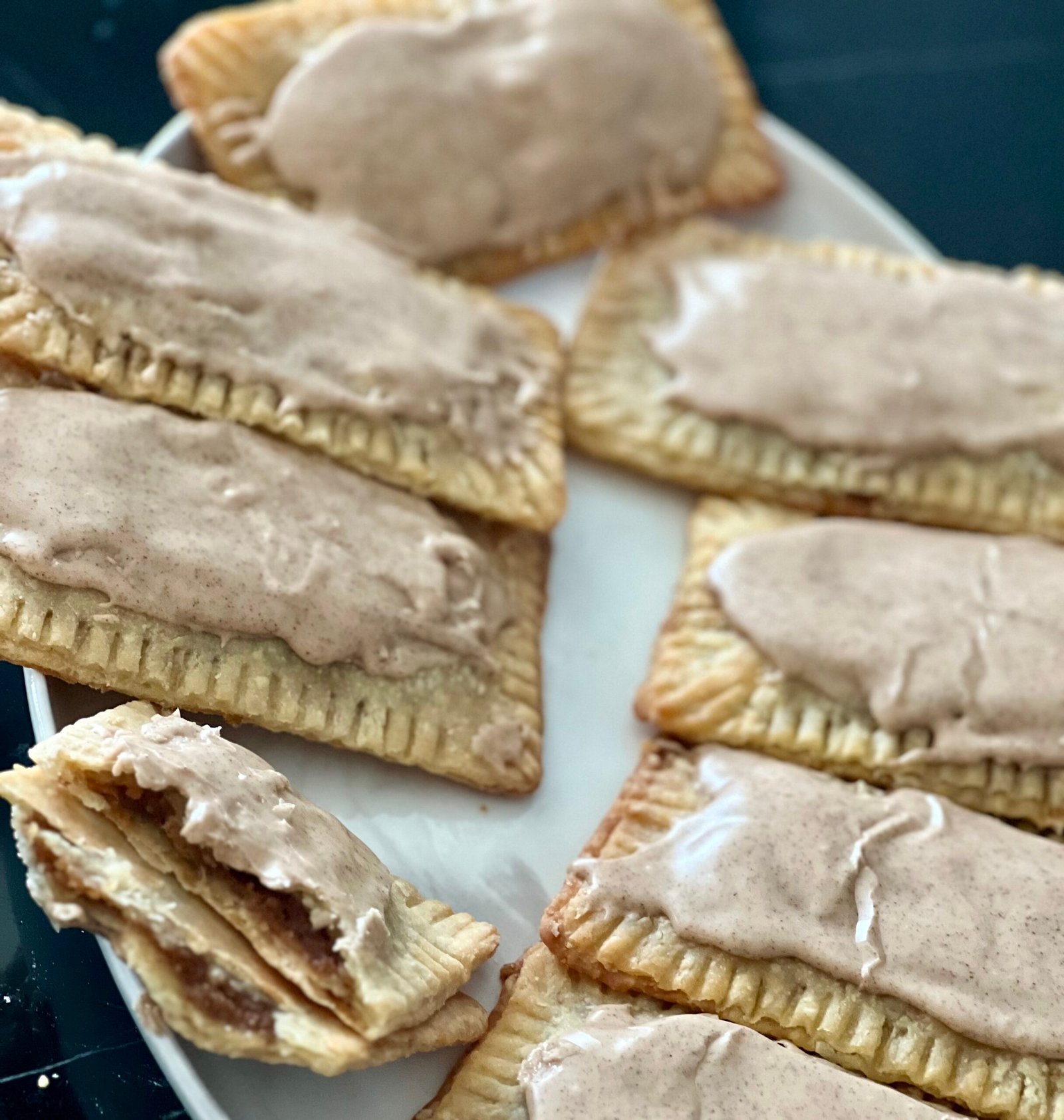
Flaky homemade pastry filled with buttery cinnamon brown sugar and topped with a sweet cinnamon glaze.
There’s something nostalgic about a brown sugar cinnamon Pop-Tart, but I wanted to see if I could make a better version from scratch. My goal was to recreate the classic Kellogg’s pastry, replacing the shortening with lard and using real butter for flavor.
Unlike my signature flaky pie crust, this pastry is intentionally a little more tender and less flaky, closer to the original Pop-Tart texture. It’s filled with buttery cinnamon brown sugar and finished with a thick vanilla-cinnamon glaze.
They’re delicious freshly baked, but the pastry becomes even more tender the next day.
Brown Sugar Cinnamon Toaster Pastries
Ingredients
Instructions
- In a large mixing bowl, whisk together the flour, granulated sugar, and salt.
- Add the cold butter and lard. Using a pastry cutter, work the fats into the flour until the mixture resembles coarse crumbs with some pea-sized or smaller pieces remaining. Avoid working it into a completely smooth paste.
- Add the cold, full-fat sour cream. Fold gently with a fork or spatula until distributed; the mixture will still be shaggy and look dry. Do not add water yet.
- Cover the bowl and refrigerate for 10 minutes to allow the moisture to distribute.
- Remove from the refrigerator and squeeze a handful of the mixture. If it holds together, do not add water. Otherwise, sprinkle on 1 teaspoon (5g) ice-cold water at a time, toss gently, and repeat the squeeze test. Stop as soon as the mixture holds together when pressed. The water range is a guide, not a target.
- Turn the mixture onto a lightly floured surface and press it together with your hands. Fold or press only enough to form a cohesive dough; do not knead it smooth.
- Divide the dough into two equal portions, shape each into a rectangle, and wrap tightly in plastic.
- Refrigerate for at least 2 hours before rolling.
- In a medium bowl, combine the brown sugar, flour, cinnamon, and salt.
- Add the melted, slightly cooled butter and stir until evenly incorporated. The mixture should resemble moist, cohesive brown sugar rather than dry, loose crumbs.
- Set aside while rolling the pastry.
- On a lightly floured surface, roll one portion of dough into a rectangle approximately ⅛ inch (3mm) thick.
- Using a 5.1 × 3.3-inch rectangular cutter, cut as many pastry rectangles as possible.
- Repeat with the second portion of dough, keeping the rectangles as uniform as possible.
- Pair the rectangles into matching tops and bottoms. Gather and gently reroll scraps as needed.
- Transfer the rectangles to a parchment-lined baking sheet and refrigerate briefly if the dough becomes soft.
- Arrange half the pastry rectangles on a parchment-lined baking sheet.
- Spoon the brown sugar cinnamon filling into the center of each rectangle, spreading it into an even layer and leaving approximately ½ inch of exposed pastry around the edges.
- Lightly brush the exposed edges with water, using just enough to moisten them without making the dough soggy.
- Roll a dough docker over the top pastry rectangles to create small steam vents. If you don’t have a docker, prick each top several times with a fork.
- Carefully position a top rectangle over each filled bottom rectangle.
- Gently press the top pastry against the filling to reduce empty space without stretching or tearing the dough.
- Press the edges together gently, then use a fork once to seal with light, even pressure. Avoid repeatedly compressing the border; overly dense edges can bake up tough.
- Preheat the oven to 325°F (163°C).
- Arrange the pastries on a parchment-lined baking sheet, leaving space between them.
- Bake for approximately 25–30 minutes, beginning to check after 25 minutes and continuing in 2–3-minute increments as needed.
- The pastries are done when the crust feels set and dry to the touch, the edges are lightly golden, and the bottoms are fully baked and lightly browned.
- Remove from the oven and transfer to a wire rack to cool completely before glazing.
- In a small bowl, whisk together the powdered sugar, cinnamon, and vanilla extract.
- Gradually add the milk, stirring until the glaze becomes smooth and thick but spreadable.
- If necessary, add a little additional milk, a few drops at a time, until the glaze reaches the desired consistency.
- Spoon or spread the glaze over the completely cooled pastries, leaving a small border around the edges.
- Allow the glaze to set before serving.
Notes
Frequently Asked Questions
That’s intentional. I wanted to recreate the more tender, slightly crumbly texture of the original Kellogg’s Pop-Tart rather than the flaky layers of my signature pie crust. The goal is a pastry that holds its shape, supports the filling, and has a softer bite.
Yes, vegetable shortening can generally replace lard by weight, although the flavor and texture may differ. I chose lard because I wanted to recreate the original shortening-based pastry while using the same traditional fat I use in my pie crusts.
Absolutely, but expect a different result. My signature butter-lard pie crust produces a flakier, more delicate pastry. This dough is designed to be a little sturdier and closer to the texture of a traditional Pop-Tart.
You can freeze the assembled, unbaked pastries on a baking sheet, then transfer them to a freezer-safe container. Bake from frozen, allowing additional time as needed until the pastry is fully baked. Add the cinnamon glaze only after the pastries have cooled completely.